Coverage across lawns, docks, and outbuildings is the hard problem. Everything else is easy by comparison.
A lake property is not one building. It is a house, a terrace, a lawn that falls a hundred feet, a dock, and often a garage or guest structure — all of which people expect to work as one system. That geography, not the equipment, is the design challenge.
Network first
Everything else depends on it. That means hardwired backhaul to outbuildings and the dock where possible, weather-rated outdoor access points, a real firewall and switch rather than a consumer router, and conduit run during construction so the system can be upgraded without trenching a finished lawn.
Audio
Distributed audio indoors, landscape audio buried along the path to the water, and marine-rated speakers on the dock. Sound carries far across calm water, so zone volumes and directionality matter more here than in a neighborhood.
Lighting and shades
Automated shading is close to mandatory on western glass — it protects furnishings and makes afternoon rooms usable. Landscape and path lighting should be designed with dark-sky discipline; the neighbors are looking at your shoreline.
Media and control
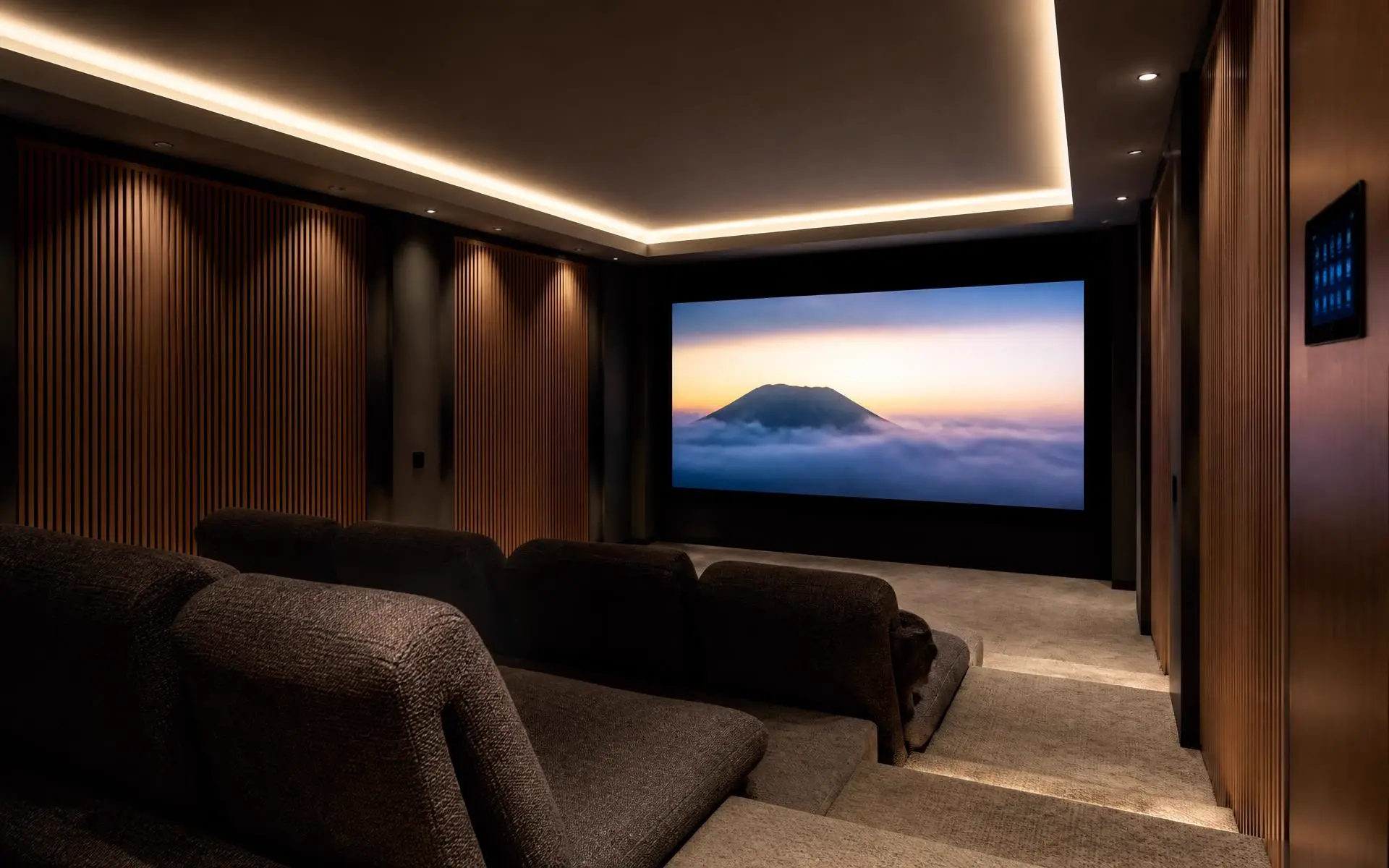
A dedicated theater if the program supports it, otherwise a well-executed great-room system that disappears. One control interface for lighting, shades, audio, HVAC, cameras, and gates — not five apps.
Security and away-mode
Cameras covering approach, dock, and outbuildings; water sensors in crawlspaces and mechanical rooms; leak and freeze alerts that matter for a property that may sit empty midweek.
Do it during framing
Pre-wire is a fraction of the cost of retrofit and produces a dramatically cleaner result. Coordinate with the builder and designer at the same table.
The network
The people we build with
One group covers the whole arc of a lake property: find it, build it, finish it, wire it. Everything else, we refer out.
Estate-level custom building for lake and near-lake sites — from shoreline grading and foundation engineering to millwork and final punch. The team that gets a house onto a difficult Catawba lot without fighting it.
Licensed North Carolina brokerage covering the Mountain Island Lake corridor across Mecklenburg, Gaston, and Lincoln counties — including the off-market waterfront that never reaches a public feed.
Interior design built for lake light and lake life: durable natural materials, restrained palettes, and rooms that hold up to wet feet, big sun, and long weekends full of people.
Whole-home control, outdoor and dock audio, shoreline-grade Wi-Fi, lighting, shades, and surveillance — designed during framing, not bolted on afterward.
Beyond the shoreline itself, the wider Charlotte market — neighborhoods, relocation, and everyday buying and selling — sits with Peters Team Realty. For anything outside the group, the wider network covers the trades and services this lake tends to need.