History
A village under the water
Mountain Island Lake is a century old, and it drowned a town to get here.
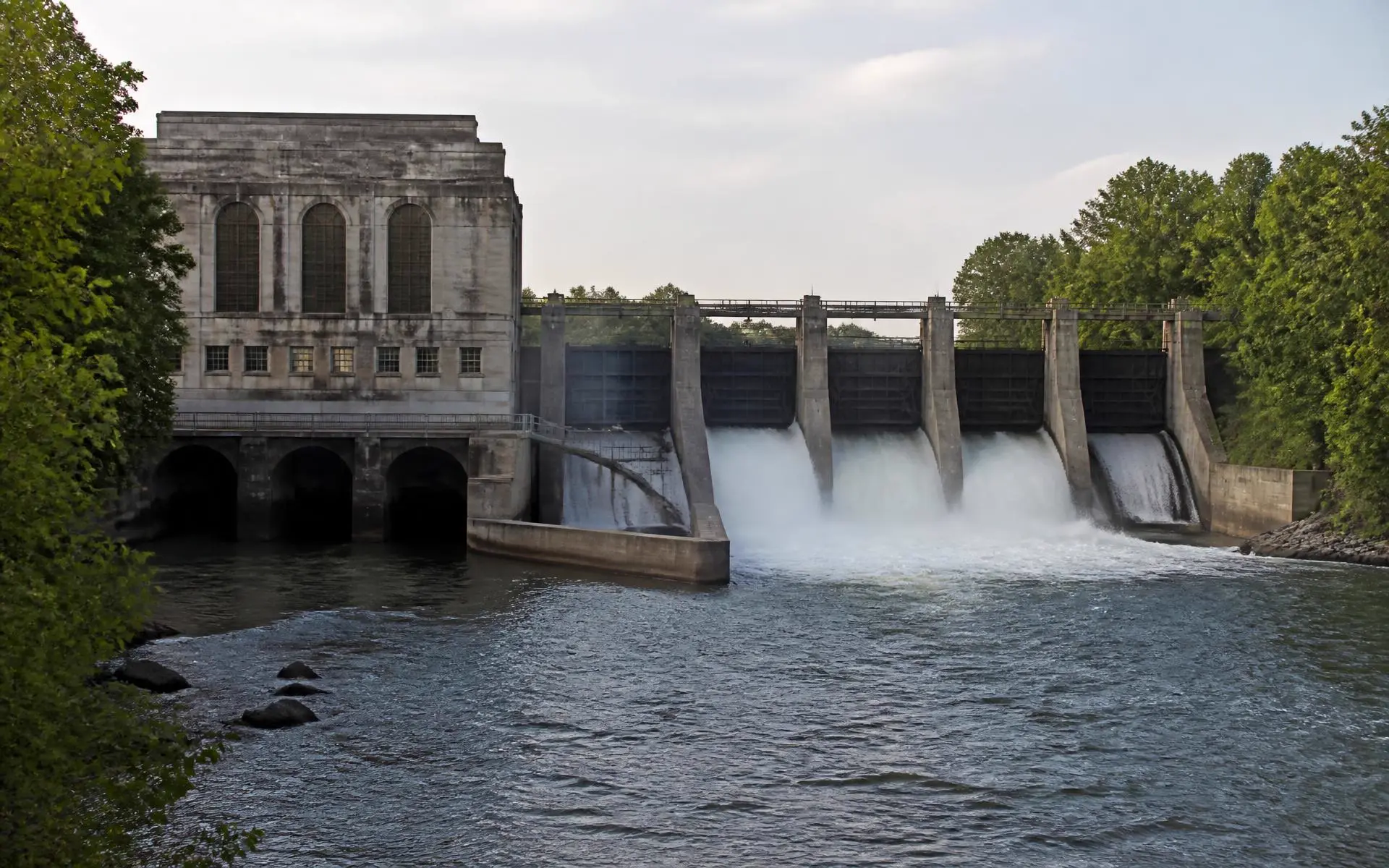
Before the lake there was a river, a rocky island the locals called Mountain Island, and a cotton mill village built around the water power it offered. In the early twentieth century the Southern Power Company — the enterprise that became Duke Power and later Duke Energy — was systematically converting the Catawba into a staircase of hydroelectric reservoirs. Mountain Island was one rung on that ladder.
When the dam was completed in 1923, the rising water took the mill, the village, farmland, roads, and the island itself. What replaced them was a narrow reservoir that has generated electricity continuously for a century and that, decades later, took on a second job nobody planned for in 1923: supplying Charlotte's drinking water.
Timeline
A hundred years on the Catawba
- Pre-1900s
- The Catawba runs free past Mountain Island; a mill village grows around the river's water power.
- 1900s–1910s
- Southern Power Company begins damming the Catawba to electrify the Carolina Piedmont.
- 1923
- The Mountain Island dam is completed. The reservoir fills, submerging the village and the island it was named for.
- Mid-century
- The lake becomes a regional drinking-water source as Charlotte grows.
- 1960s
- Lake Norman is completed upstream, permanently changing flow into Mountain Island.
- 1990s–2000s
- Latta Nature Preserve and surrounding conservation land lock in large stretches of shoreline.
- Today
- A working reservoir doing three jobs at once: power, water supply, and a quiet residential lake.
Why the history still shapes the market
Because the lake was engineered rather than discovered, its shoreline was drawn by a utility rather than by developers. The project boundary, the buffer, and the absence of a commercial waterfront all descend directly from decisions made in the 1920s and from the water-supply role added later. That is the origin of the scarcity described in the real estate guide.
Nearby, Historic Rural Hill preserves the Scots-Irish farmstead landscape that predates the lake entirely — see parks and nature.
Keep reading
Continue the guide
The Mountain Island Lake Guide
The lake itself — 3,281 acres, 61 miles of shoreline, and how it works.
Parks & Nature at Mountain Island Lake
Latta Nature Preserve, Rural Hill, greenways, and 1,300+ protected acres.
Mountain Island Lake Communities
Every neighborhood around the lake, compared shore by shore.
Latta Plantation
The historic house, the preserve around it, and what is actually open.
More in The lake
- Boating on Mountain Island Lake
- Dock Permits & Shoreline Rules
- Lake Access: Ramps & Launches
- Mountain Island Lake Facts
- Latta Nature Preserve
- Kayaking Mountain Island Lake
- Boat Ramps on Mountain Island Lake
- The Catawba River
- Water Level & Full Pond
- Fishing Mountain Island Lake
- Mountain Island Lake Water Quality
- Mountain Island Dam & Hydro Station
- Swimming in Mountain Island Lake
- Lucia Access Area
- Water Temperature
- Parks on Mountain Island Lake