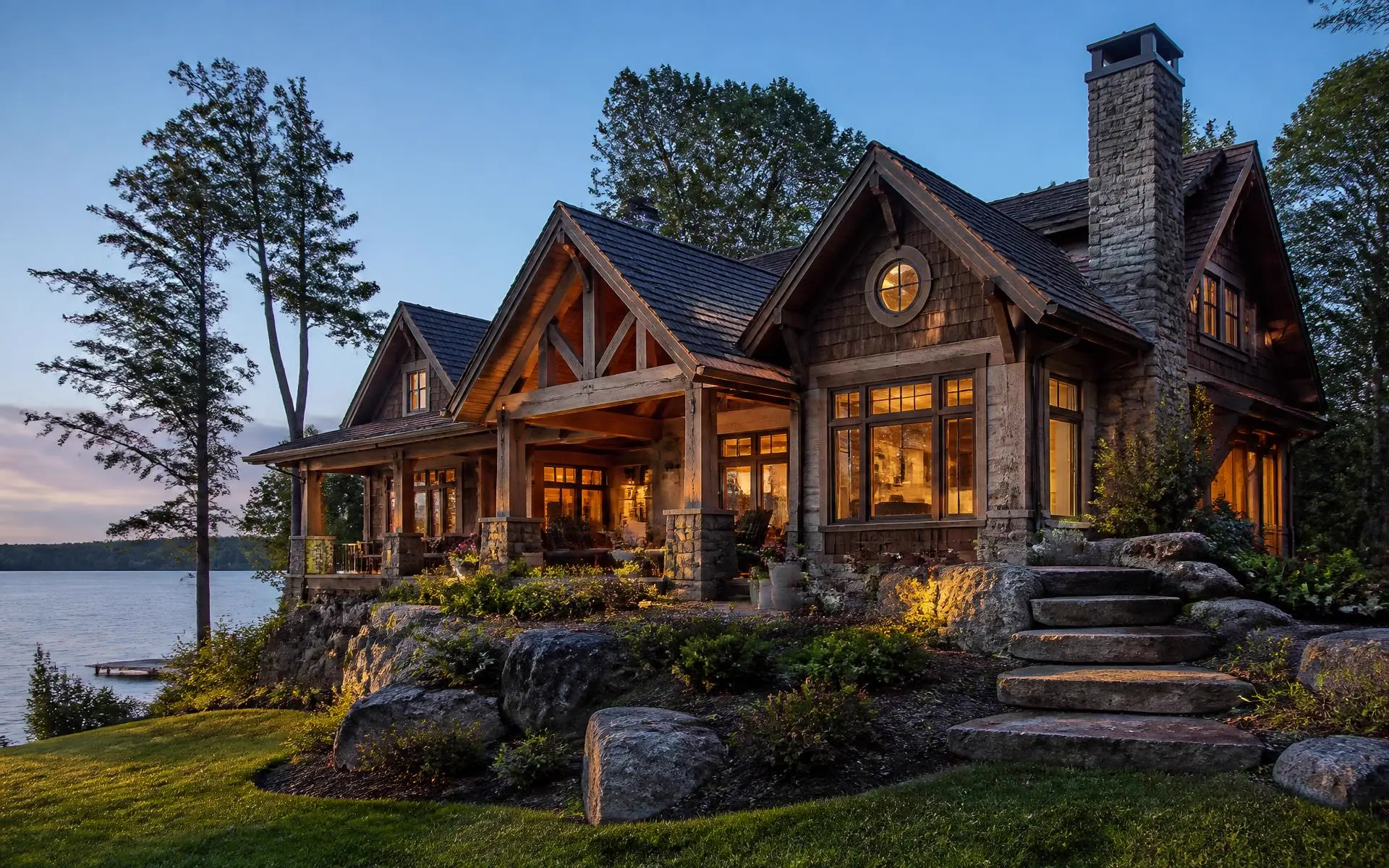
The house is the easy part. The lot, the buffer, and the permits are where lake projects are won or lost.
Building on a drinking-water reservoir is a constrained exercise, and the constraints arrive before design. Impervious-surface caps, vegetated buffers, slope, and the Duke Energy project boundary together determine what house is even possible on a given lot. Teams that start with those limits produce better houses than teams that start with a floor plan.
Site work is the budget
Piedmont lake lots fall to the water. Grading, retaining walls, drainage, rock removal, and erosion control routinely consume a six-figure share of a waterfront build before framing. A geotechnical opinion early is the cheapest insurance available.
What it costs
Estate-grade custom work in this corridor has generally run from roughly $350 per square foot into the $600s and above, driven by site conditions, structural complexity, glazing, and finish level. Renovations of older lake cottages often land at similar per-foot numbers once structure and systems are addressed. For a broader regional baseline before you set a budget, compare against Charlotte-area cost-to-build data.
Duke Energy authorization for anything inside the project boundary.
Septic permitting where sewer is unavailable.
Driveway, tree, and erosion-control approvals depending on jurisdiction.
Timeline
Eighteen months to well over two years from first sketch to move-in for a waterfront custom build, with permitting the least predictable segment. Renovations move faster but discover more.
Sequencing the trades
Systems should be designed during framing, not after drywall. Networking, audio, lighting control, shading, and camera infrastructure are dramatically cheaper pre-wired, and dock power and lighting need to be coordinated with shoreline approvals rather than added later.
Answers
Questions & Answers
What does it cost to build a custom home at Mountain Island Lake?
Estate-grade custom construction in the Charlotte lake corridor has generally run from roughly $350 to well over $600 per square foot depending on site work, foundation conditions, finish level, and shoreline requirements. Waterfront lots add cost through grading, retaining, erosion control, and watershed compliance.
Usually yes, and often from more than one authority: the county or municipality for zoning and building permits, the applicable watershed overlay for impervious-surface and buffer limits, and Duke Energy for anything within the project boundary such as docks, retaining walls, or shoreline stabilization.
Estate-level custom building for lake and near-lake sites — from shoreline grading and foundation engineering to millwork and final punch. The team that gets a house onto a difficult Catawba lot without fighting it.
Licensed North Carolina brokerage covering the Mountain Island Lake corridor across Mecklenburg, Gaston, and Lincoln counties — including the off-market waterfront that never reaches a public feed.
Interior design built for lake light and lake life: durable natural materials, restrained palettes, and rooms that hold up to wet feet, big sun, and long weekends full of people.
Whole-home control, outdoor and dock audio, shoreline-grade Wi-Fi, lighting, shades, and surveillance — designed during framing, not bolted on afterward.
Beyond the shoreline itself, the wider Charlotte market — neighborhoods, relocation, and everyday buying and selling — sits with Peters Team Realty. For anything outside the group, the wider network covers the trades and services this lake tends to need.